



Thread Lift in Bursa
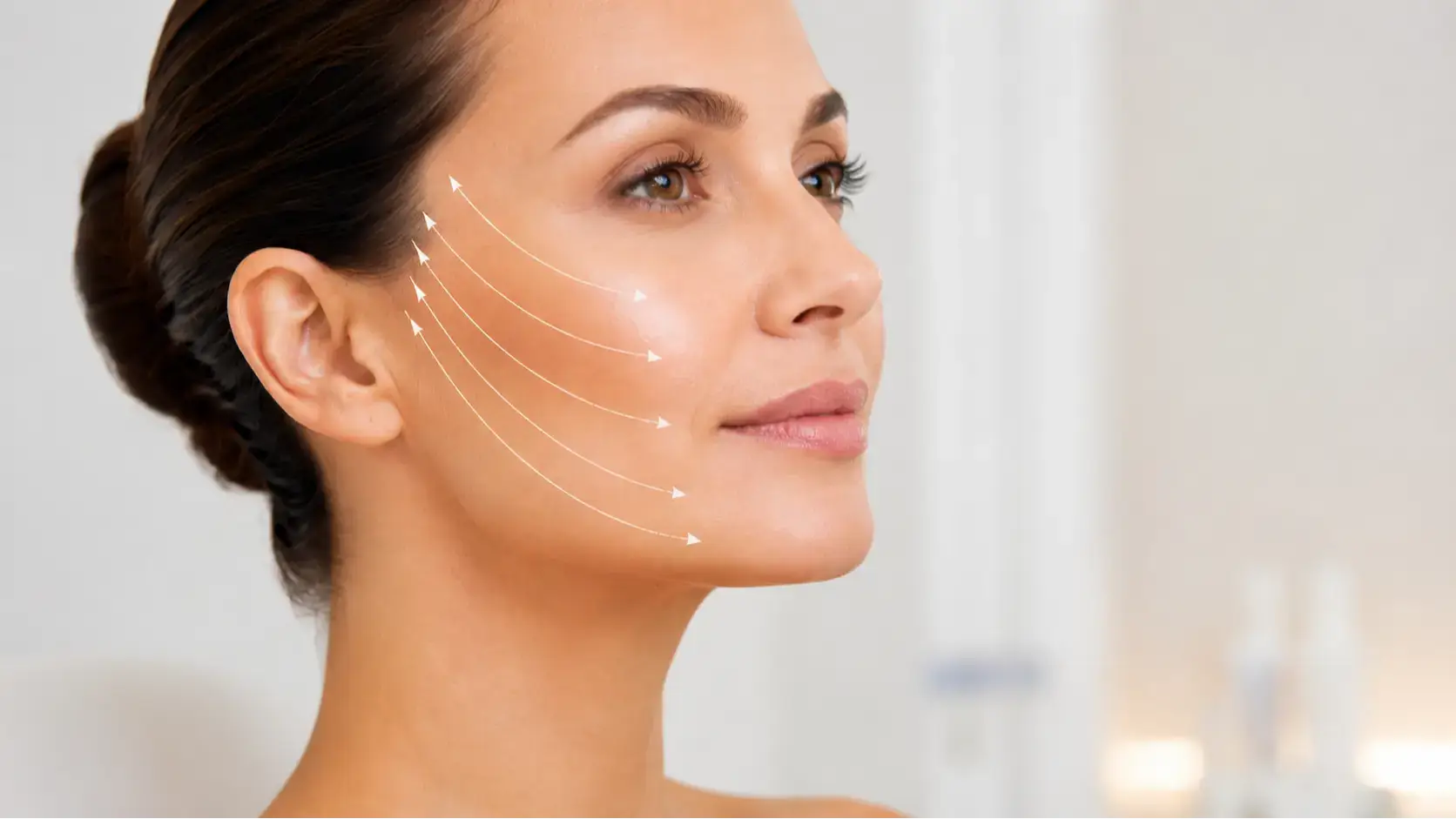
Sagging, loss of elasticity, and loosening of the facial oval may appear over time and can make a person look more tired or older than they feel. For many people looking for an alternative to surgical facelift procedures, a thread lift stands out as one of the medical aesthetic options that may offer a more natural-looking result and a shorter recovery period.
Thread lift in Bursa may be preferred especially to help define facial contours, improve the appearance of the jawline, support the cheek area, and reduce mild to moderate sagging. The main purpose of this procedure is not to artificially change the face, but to support the person’s existing facial anatomy and help achieve a more rested, lifted, and natural appearance.
Non-surgical facelift methods have gained increasing interest in recent years. Among the main reasons for this are that they do not require surgical incisions, the procedure time is usually shorter, the return to daily life may be more comfortable, and the results may better align with the expectation of a natural appearance. However, it should be remembered that thread lift treatment is not suitable for every patient, and the outcome may vary depending on skin structure, age, degree of sagging, lifestyle, and treatment planning.
What Is a Thread Lift?
A thread lift is a non-surgical facial rejuvenation procedure that aims to support facial tissues and create a lifting effect in specific areas through special medical threads placed under the skin. The type, structure, and placement technique of the threads used in the procedure are determined individually for each patient.
One of the commonly used thread types is known as PDO thread lift. PDO is a material that has been used in medicine for many years and can be gradually absorbed by the body over time. When these threads are placed under the skin, they may provide a mechanical support effect. They may also help stimulate a biological response in the treatment area that supports skin quality.
The effect of a thread lift is not limited only to lifting tissues upward. The threads placed under the skin may create controlled stimulation in the area and help support collagen production. Collagen is one of the essential structural proteins that plays an important role in skin firmness, elasticity, and a more vibrant appearance. For this reason, a thread lift may be considered both for facial lifting and for supporting skin quality.
An important point is that a thread lift does not promise the same result as a surgical facelift. While it may be a more suitable option for mild to moderate sagging, different treatment options may be required for patients with advanced skin laxity or significant tissue sagging.
How Is a Thread Lift Performed?
Before a thread lift procedure, the patient’s facial structure, skin quality, degree of sagging, facial proportions, and expectations are evaluated in detail. This assessment is one of the most important stages for the success of the procedure. Every face has a different structure, and the same number of threads, same entry points, or same technique should not be applied to every patient.
The procedure is generally planned through the following steps:
First, the treatment areas are determined. Areas such as the facial oval, cheeks, jawline, neck, or eyebrow region are analyzed according to the patient’s needs. The skin is then cleansed and the treatment area is sterilized. Local anesthesia may be applied to improve patient comfort.
After that, medical threads are placed into the appropriate subcutaneous plane with the help of special cannulas or needles. The direction, depth, and lifting line of the threads are determined according to the targeted lifting effect. The aim during the procedure is not to pull the tissue aggressively, but to support it in accordance with the facial anatomy.
The duration of the procedure may vary depending on the treatment area and planning. In most cases, a thread lift is a medical aesthetic procedure performed in a clinical setting and completed on the same day. Following the aftercare instructions recommended by the doctor helps support a healthier recovery process.
Who Is a Good Candidate for a Thread Lift?
A thread lift is generally considered for people who have mild to moderate facial sagging but do not want a surgical facelift. It may be preferred especially when the facial oval begins to lose definition, looseness appears along the jawline, downward movement occurs in the cheeks, or skin elasticity starts to decrease.
Many patients researching thread lift in Bursa want to achieve a more lifted facial expression while preserving their natural appearance. At this point, a thread lift may be an option that supports facial contours with proper patient selection.
Thread lift treatment may be suitable for people whose skin elasticity has not completely disappeared, those with mild to moderate sagging, those who do not want surgery, those looking for a shorter recovery period, those who want more defined facial contours, and those who expect a natural-looking lifting effect.
However, the procedure may not be suitable during pregnancy, breastfeeding, active skin infection, bleeding disorders, uncontrolled chronic diseases, or active inflammation in the treatment area. Therefore, the decision for a thread lift should always be made after a doctor’s examination.
Which Areas Can Be Treated with a Thread Lift?
Thread lift treatment can be planned for different areas of the face and neck. The treatment area is determined according to the patient’s anatomical needs.
One of the most commonly treated areas is the jawline. With the aging process, loss of definition in the jawline and looseness in the lower face may occur. A thread lift may help achieve a more lifted and defined appearance in this area.
The cheek area is also one of the frequently preferred regions for thread lift treatment. Downward tissue movement in the mid-face area can cause the face to look more tired. Thread lift planning for the cheeks may aim to increase mid-face support.
The lower face, submental area, neck, eyebrow area, and facial oval may also be evaluated depending on the patient’s needs. In some patients, a thread lift alone may be sufficient, while in others, it may be combined with jawline filler, Botox, facial rejuvenation procedures, or collagen-stimulating treatments.
The purpose of these combinations is not to change the face, but to address the effects of aging in different layers in a more balanced way.
Thread Lift or French Lift?
Thread lift and French lift are often confused with each other. Both methods may be used for non-surgical facial lifting; however, they may differ in terms of the structure of the threads used, lifting strength, placement technique, and targeted effect.
A thread lift is generally performed with PDO or similar absorbable medical threads and aims to provide both mechanical support and collagen stimulation. It may be preferred for mild to moderate sagging.
A French lift is known as a lifting technique performed with different types of threads and usually aims for a stronger lifting effect. It may be considered in some patients who need a more noticeable lifting result. However, not every patient is suitable for a French lift.
The most appropriate method should be determined according to the patient’s age, skin structure, level of sagging, facial anatomy, and expectations. Therefore, there is no single answer to the question, “Is thread lift or French lift better?” The most accurate approach is personalized planning after a medical examination.
How Long Does a Thread Lift Last?
“How long does a thread lift last?” is one of the most frequently asked questions by patients researching this procedure. The longevity of a thread lift may vary depending on the type of thread used, application technique, skin structure, age, lifestyle, smoking habits, sun exposure, and skincare routine.
In general, the threads are expected to be gradually absorbed by the body over time. However, the support effect and collagen stimulation created by the threads may continue for a period that varies from person to person. For this reason, giving a guaranteed number of years is not medically accurate.
In some patients, the effect may be felt for a longer period, while in others, it may decrease earlier due to skin structure or lifestyle habits. Regular skincare, sun protection, healthy lifestyle habits, and a follow-up plan recommended by the doctor are important for supporting the longevity of the results.
Recovery After Thread Lift
The recovery process after a thread lift may generally be shorter and more comfortable compared to surgical procedures. However, this does not mean that there will be no post-procedure symptoms. Mild swelling, edema, bruising, tenderness, a feeling of tightness, or temporary asymmetry may occur in the treatment area.
During the first days, it is important not to overuse facial expressions, avoid firm massage, avoid sleeping face down, and protect the treatment area for the period recommended by the doctor. Especially during the first few weeks, care should be taken while the threads settle under the skin.
The return to social life may vary from person to person. Some patients may return to daily life within a short time, while others may experience swelling or tenderness for a few more days. The most accurate guidance during this period should come from the doctor who performed the procedure.
Is Thread Lift Risky?
Thread lift is one of the methods used in medical aesthetics when performed with proper patient selection, sterile conditions, correct technique, and physician experience. However, as with every medical procedure, thread lift may involve certain risks and temporary side effects.
After the procedure, swelling, bruising, tenderness, a stinging sensation, mild pain, temporary irregularities, or asymmetry may occur. In rare cases, infection, the feeling of threads under the skin, skin dimpling, or undesired aesthetic results may develop.
For this reason, the decision to have a thread lift should not be based only on price or the expectation of fast results. The experience of the physician, the quality of the material used, sterilization conditions, and personalized treatment planning are extremely important.
Patients considering a thread lift in Bursa should have a detailed examination before the procedure, clearly share their expectations, and consider the physician’s suitability assessment.
Thread Lift Prices in Bursa
Thread lift prices in Bursa may vary depending on the treatment area, the number of threads used, the type of threads, the scope of the procedure, and the personalized treatment plan. Therefore, it is not appropriate to provide a fixed price without a medical examination.
In some patients, a limited application for only the jawline or cheek area may be sufficient, while in others, the facial oval, neck, and mid-face area may need to be addressed together. The type and number of threads used are also important factors affecting pricing.
When researching prices, the evaluation should not be based only on cost. It is also important to consider whether the procedure is planned by a physician, the reliability of the products used, the clinical environment, and the post-procedure follow-up process.
The most accurate price information can be provided after facial analysis and a personalized treatment plan.
What Should Be Considered Before a Thread Lift?
Before a thread lift, the patient’s general health condition, medications, previous aesthetic procedures, and expectations should be evaluated. Blood-thinning medications, certain supplements, or active skin infections may affect treatment planning.
It is also important for the patient’s expectations to be realistic. A thread lift is not a procedure that completely changes the face or provides the exact same effect as a surgical facelift. It is mainly intended to help support mild to moderate sagging and create a more lifted appearance in the facial contours.
For this reason, detailed pre-procedure information is critical for patient satisfaction and safe application.
Treatments That Can Be Combined with Thread Lift
Facial aging is not only about sagging. Volume loss, expression lines, reduced skin quality, loss of elasticity, and contour changes may occur together. Therefore, while a thread lift alone may be sufficient for some patients, combined treatment plans may provide more balanced results in others.
For example, jawline filler may be considered to support jawline definition, Botox for expression lines, collagen-stimulating treatments to improve skin quality, or facial rejuvenation procedures targeting general signs of aging.
If needed in terms of lip volume and facial proportions, procedures such as lip filler in Bursa may also be evaluated within the overall aesthetic planning. However, all these treatments should be planned according to a personalized assessment.
Frequently Asked Questions
How long does a thread lift last?
The longevity of a thread lift varies from person to person. The type of thread used, skin structure, age, degree of sagging, lifestyle, and application technique may affect the result. Therefore, it is not medically appropriate to guarantee an exact number of years. A more realistic expectation can be provided after examination.
Does a thread lift completely lift the face?
A thread lift may help support facial tissues in mild to moderate sagging. However, it should not be expected to provide the same result as a surgical facelift. Patients with advanced skin excess or significant sagging may need different treatment options.
Is thread lift or filler more effective?
Thread lift and filler are used for different purposes. A thread lift helps support tissues and create a lifting effect, while filler is mainly used to restore volume loss and support facial contours. In some patients, both procedures may be planned together.
Is swelling normal after a thread lift?
Yes, mild swelling, edema, tenderness, or bruising may occur after the procedure. These symptoms are usually temporary. The recovery process may vary depending on the person’s skin structure, treatment area, and aftercare.
Is a thread lift painful?
A thread lift is usually performed under local anesthesia. This helps support patient comfort during the procedure. After the procedure, mild tightness, tenderness, or pain may be felt. This is usually temporary and can be managed with the doctor’s recommendations.
When can I return to social life after a thread lift?
The time to return to social life varies from person to person. Some patients may return to daily life within a short time, while others may need a few days of recovery due to swelling or bruising. During the first days after the procedure, it is important not to strain facial expressions and to follow the doctor’s instructions.
Can a thread lift be performed at a young age?
A thread lift is generally considered when signs of skin elasticity loss and mild sagging begin. It may not be necessary for every young patient. Suitability should be determined by a physician after evaluating the person’s facial structure, skin condition, and expectations.
Personalized Assessment for Thread Lift in Bursa
For patients considering thread lift in Bursa, the most important step is a personalized facial analysis. Each patient’s degree of sagging, skin quality, facial proportions, and expectations are different. Instead of a standard treatment plan, a medical approach determined according to individual needs is important for healthier and more natural-looking results.
During the evaluation performed by Dr. Yavuz Selim Çınar, the patient’s facial anatomy, skin structure, suitability for the procedure, and expectations are assessed together. The aim is not to create an exaggerated, artificial appearance or change the person’s expression, but to plan a balanced treatment that supports the natural structure of the face.
To get detailed information about thread lift, learn whether you are a suitable candidate, and create a personalized treatment plan, you can schedule a consultation appointment.
The information provided here is for informational purposes only and should not be considered as medical advice. Please consult with your doctor for personalized treatment recommendations and professional medical guidance.